

The first set I ever built was for a theater in Utah that seated a few hundred people.
Small regional theaters, local opera productions, audiences you could see from the stage. We worked with tight budgets and tighter deadlines, using whatever materials we could get our hands on. I had my MFA from UC San Diego and a Kennedy Center American College Theater Festival Award for Holiday Memories, and I thought I knew what I was doing.
I didn’t.
What theater actually taught me took years to understand: technical skill matters, but it’s not enough. You can build the most precise set in the world, but if the audience doesn’t feel something when the lights come up, you’ve missed the point.
Back then, I spent a lot of time trying things that failed. Experimenting with projection and scrim, trying to figure out how light could transform fabric into depth, how images could replace traditional scenic elements. Most experiments didn’t work. Some did. Those early failures turned out to matter more than I realized when I was later designing for broadcast environments reaching billions of people.
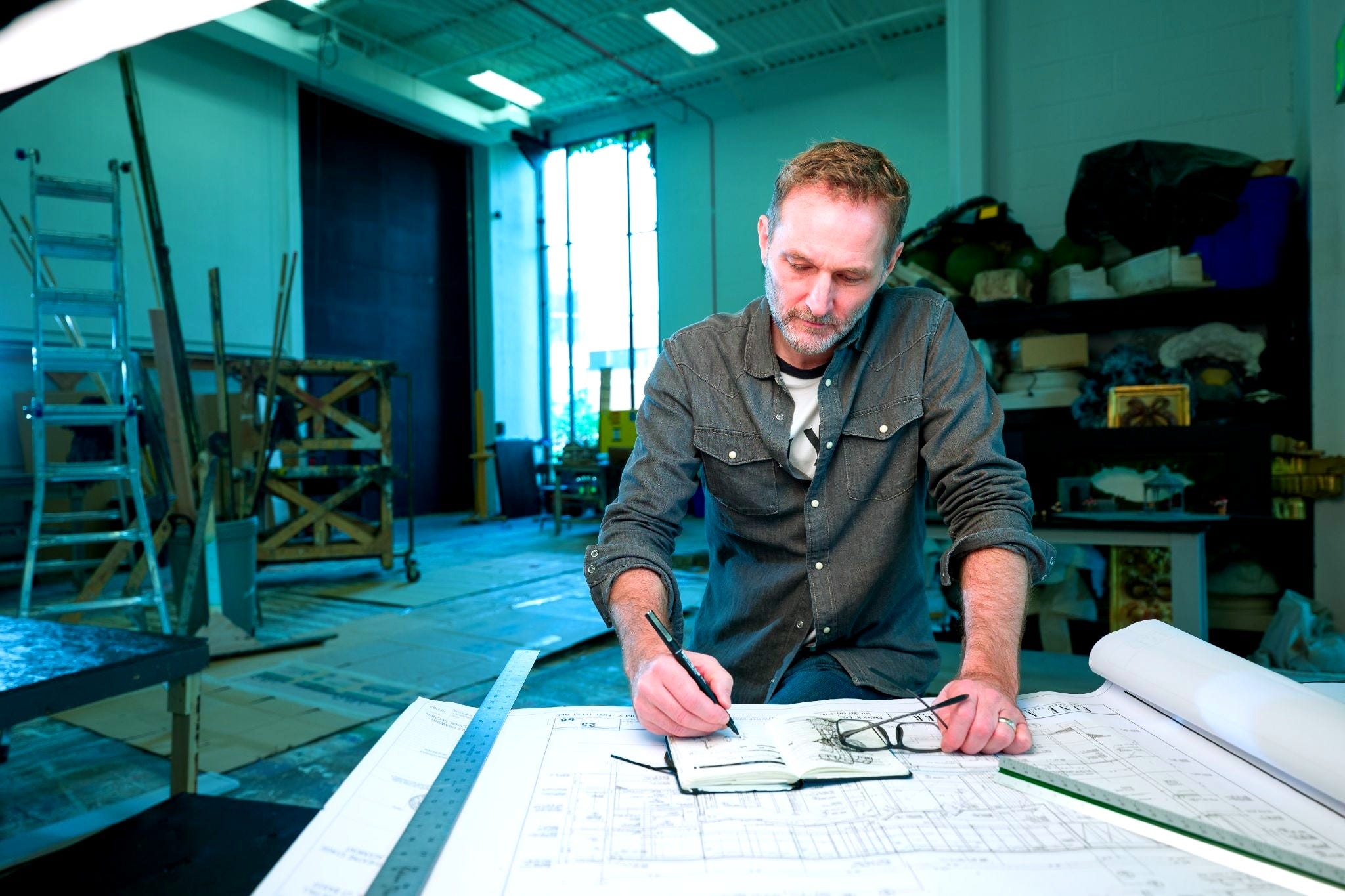
The road from Utah to global stages wasn’t a straight line.
Freelancing across the US, Cyprus, Indonesia, Singapore for over a decade. La Jolla Playhouse, Utah Festival Opera, Long Wharf Theatre, Skylight Opera. Each project taught me something new about materials, about audiences, about what actually works when you can’t just rely on budget to solve problems. Then I moved into agencies.
Moving into larger scale
In 2004, I joined Imagination in the US as a designer. Branded environments, large-scale experiential concepts, projects with budgets I hadn’t seen in theater. Different problems, same core questions about what makes spaces work for people.
Two years later, I moved to New York as VP Design Director at Jack Morton Worldwide. This is where I started working on broadcast environments and major live events. Multimedia and projection integration wasn’t standard yet. We were trying to figure out how to make technology serve the story instead of overwhelming it, how to design environments that worked both for cameras and for people in the room.
By 2012, I was Chief Creative Officer at Pico Art International in Singapore, working with teams across major projects in Asia. The scale kept growing, the complexity kept increasing. But the questions from my initial projects in Utah theaters kept coming back: does this make people feel something? Does the design serve the experience or just show off?
In 2015, I founded Studio Bound in Singapore.
Singapore made sense for what I wanted to build. The city sits between East and West, geographically and culturally. When you’re designing for truly global audiences, understanding how visual language translates across different cultures isn’t extra work, it’s the foundation. You learn quickly what works universally and what gets lost in translation.
Designing for cameras
The Vancouver 2010 Winter Olympics and Rio 2016 Summer Olympics taught me things I couldn’t have learned anywhere else. I was designing broadcast production environments for CTV, BBC, and other international networks. Not the ceremonies, but the sets, where billions of viewers experienced the Games through their screens.
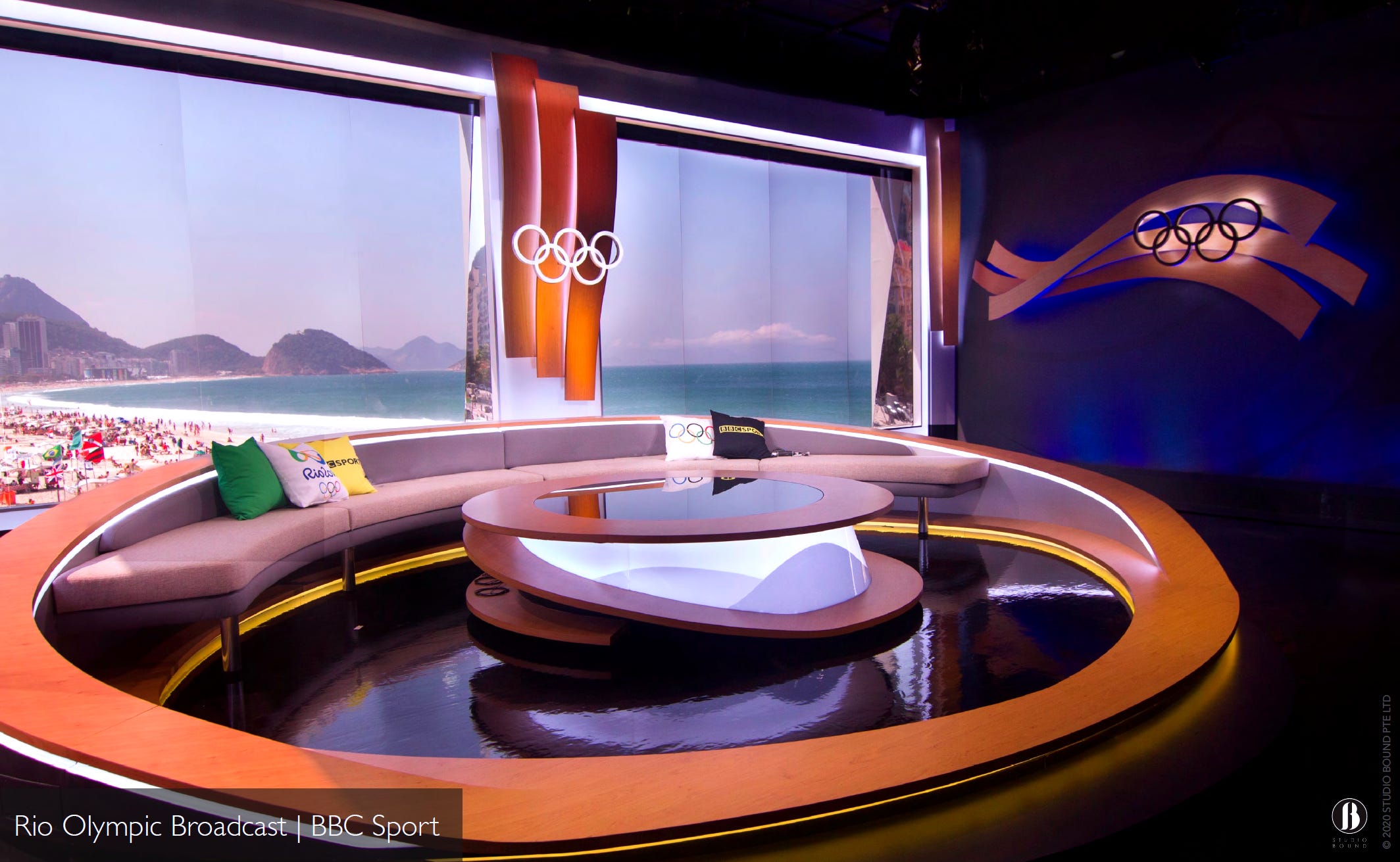
Designing for broadcast is completely different from designing for live audiences. What looks good in person often doesn’t work on camera. Color science changes. Lighting for broadcast capture isn’t the same as lighting for atmosphere. Camera angles dictate what matters and what doesn’t. You get one chance to get it right, no second takes, no fixing it in post.
We won a BDA Gold Award for the Vancouver work and got a Canadian Gemini Award nomination. But honestly, what mattered more was learning how to solve the dual problem of making something work for both television viewers and the people actually in the space. Those are often competing demands.
In 2012, I won an Emmy Award for Outstanding Achievement in a Craft for NBC News Education Nation. Production design for broadcast journalism, where the environment has to support credibility and clarity without calling attention to itself. Different constraints than entertainment, same principle: the design serves the content.
Expo 2020 Dubai
Expo 2020 Dubai changed the scale of everything.
We started working on the opening ceremony design in June 2017. By the time it happened in 2021, my team at Studio Bound had created environmental design and scenic elements for a ceremony watched by millions globally, staged beneath Al Wasl Plaza’s 130-meter dome, the world’s largest 360-degree projection surface at the time.
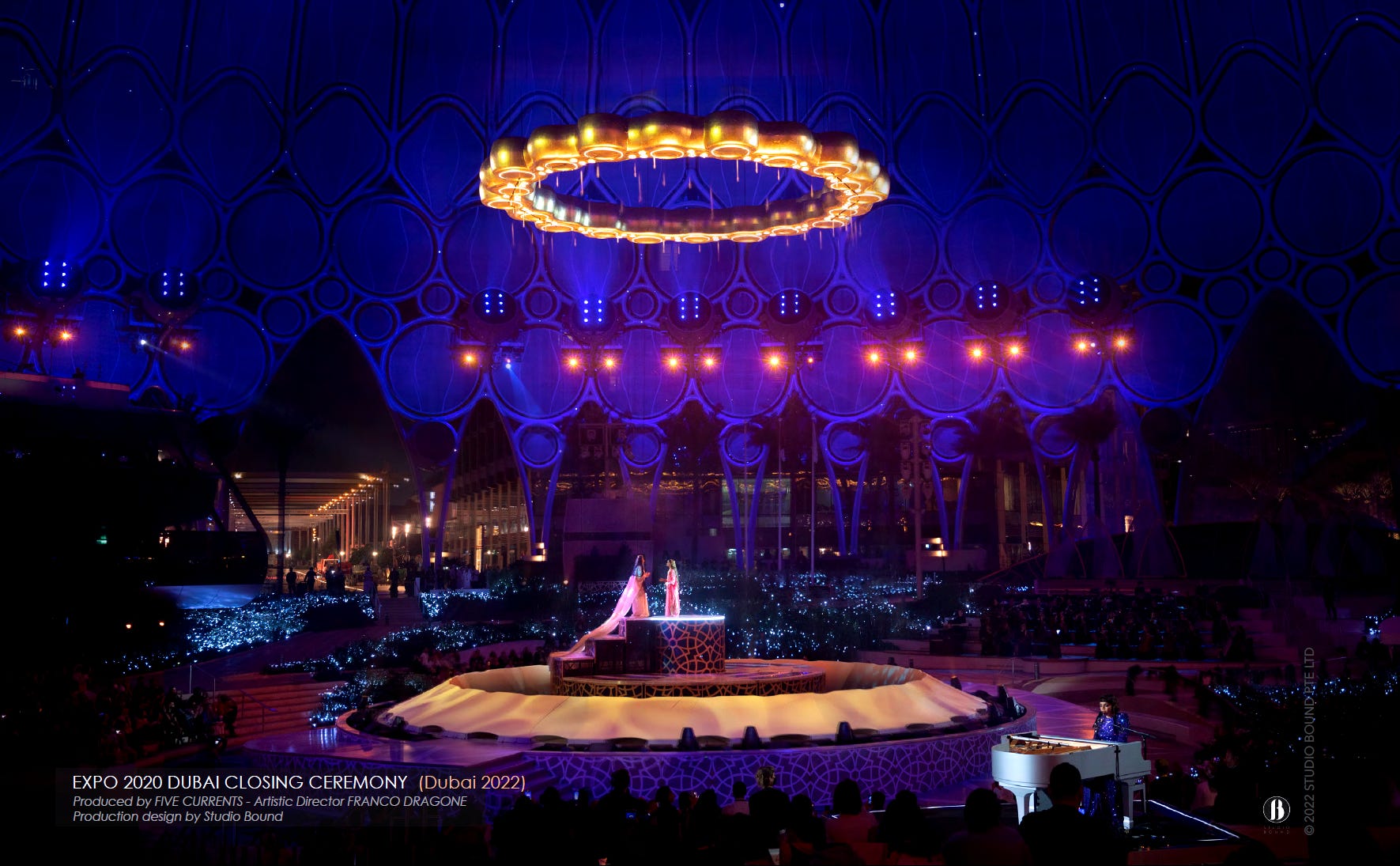
The technical numbers were massive: over 3,000 lighting fixtures, 1,000 speakers, 1,300 costumes, 62 LED rings, and professionals from 56 countries working together. But the real challenge wasn’t managing the technology. It was getting 400+ people from different disciplines and different countries to solve problems together, to speak the same visual language, to understand what we were trying to create.
We also designed the closing ceremony in 2022. 745 custom costumes, 192 participating nations, thousands watching in person and millions on broadcast. Creating an environment that worked for all of them at once, that felt cohesive despite the scale, that didn’t lose the human element in all the spectacle. I’m still not sure we got everything right, but it held together when it mattered.
Building across continents
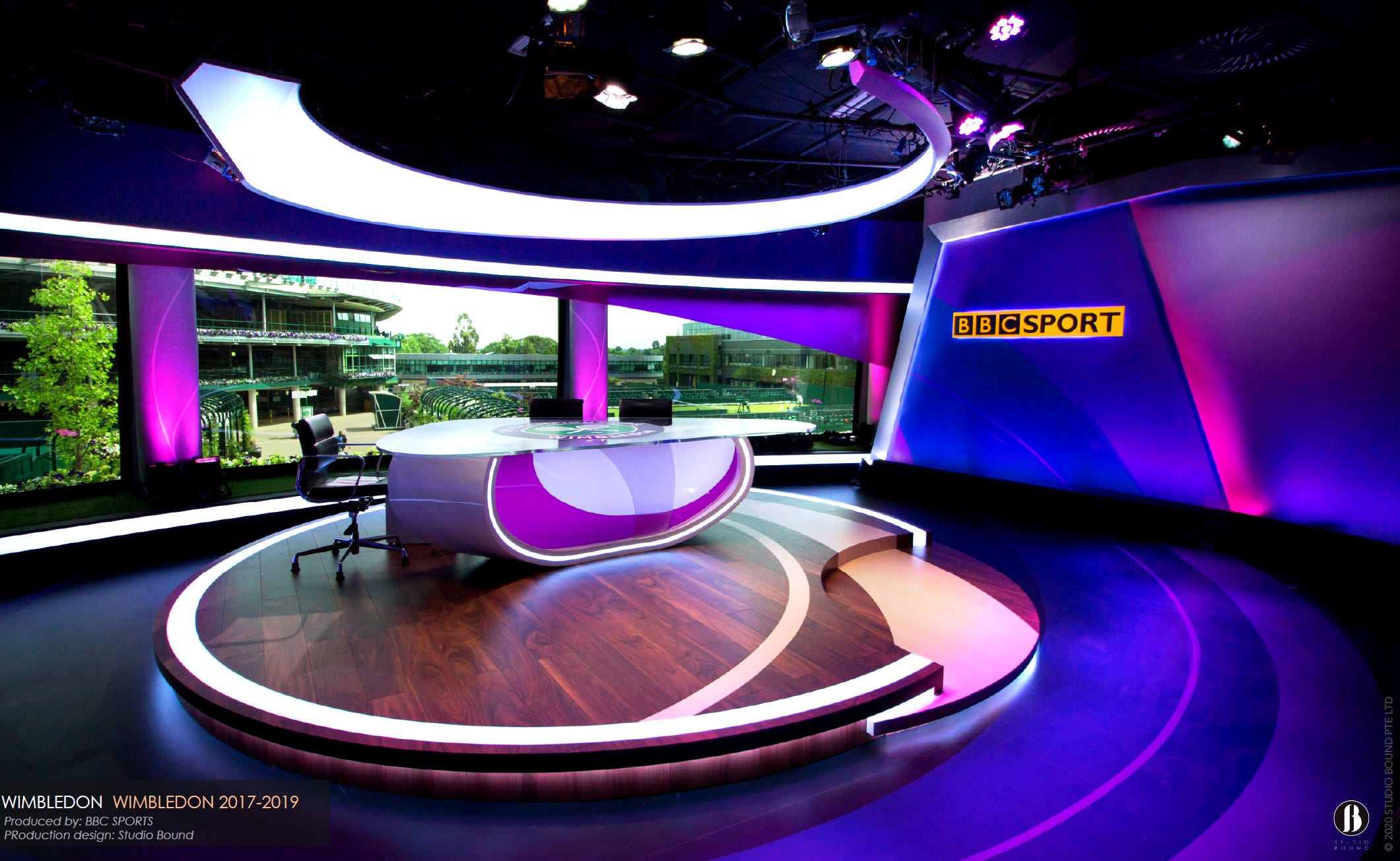
Since founding Studio Bound, the work has taken me across Asia, the Middle East, Europe, North America. Themed attractions at Universal Studios Singapore where the design has to survive millions of visitors over years. Broadcast sets for BBC Wimbledon where traditional aesthetics meet modern broadcast technology. Singapore’s National Day Parade in 2019 where you’re designing for a multicultural nation watching its own celebration.
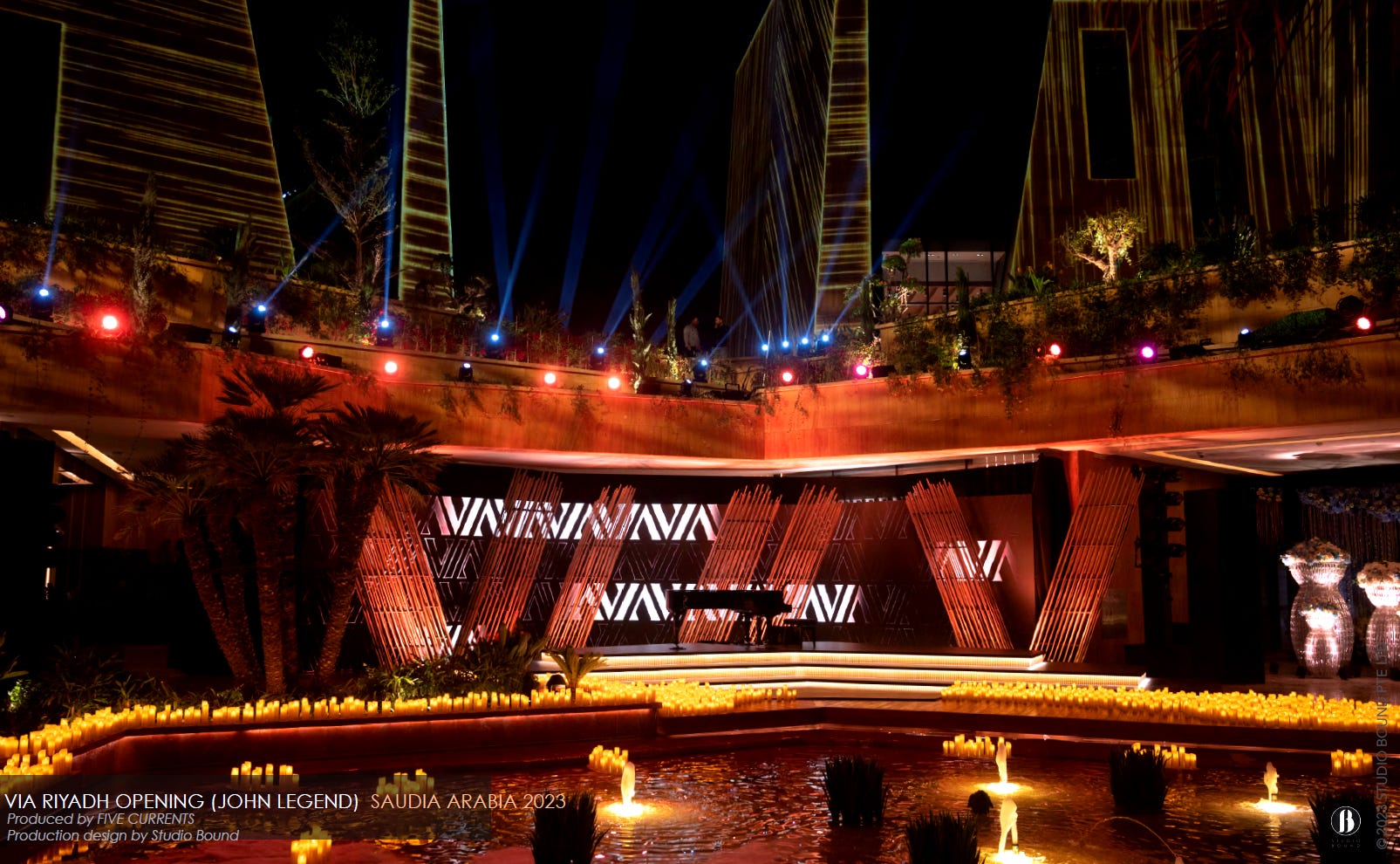
Saudi Arabia has become a major part of the work in recent years. The VIA Riyadh Opening Ceremony in 2023 with John Legend, produced by Five Currents. Plus large-scale tented installations seating around 2,300 people, with artistic direction by Dragone, partnerships that keep pushing into new territory.
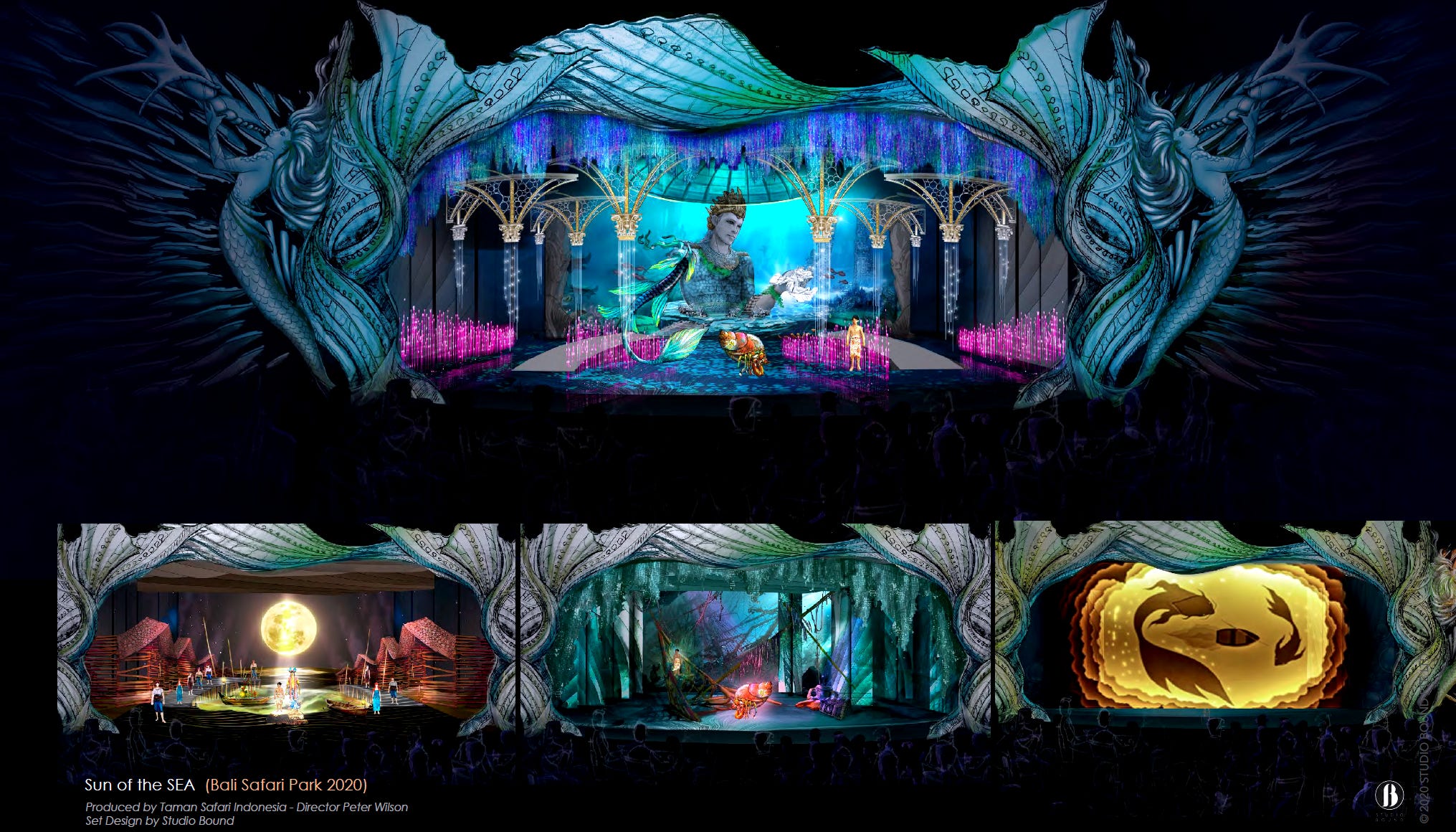
In China, we designed Steam Punk and Splendor in Wuxi for SUNAC, both with Dragone. In Las Vegas, Amystika with Criss Angel and Dragone. In Abu Dhabi, Warner Bros Christmas Spectacular and Plaza Stage. The Great 50 Show in Indonesia. Lightseeker at Resorts World Sentosa. Singapore Flyer Gallery. Permanent installations like the Ba Na Hills Entrance Arch in Vietnam and marine-themed shows at Bali Safari Park.
Different countries, different cultural contexts, different technical requirements. Same underlying question every time: does the environment support what we’re trying to make people feel?
What keeps showing up
After twenty-plus years, certain things keep becoming clearer.
Theater taught me to design for how people actually experience things, not just how they look in renderings. Large-scale events taught me that technical precision and emotional storytelling aren’t opposite goals, they depend on each other. Broadcast work taught me that designing for cameras and designing for live audiences are fundamentally different problems, and you have to solve both without compromising either.
The work keeps evolving. Projects keep getting more complex, spanning more countries, involving more collaborators. But the foundation built in those small Utah theaters, where you couldn’t hide behind budget or spectacle and every choice had to earn its place, that foundation still guides the work.
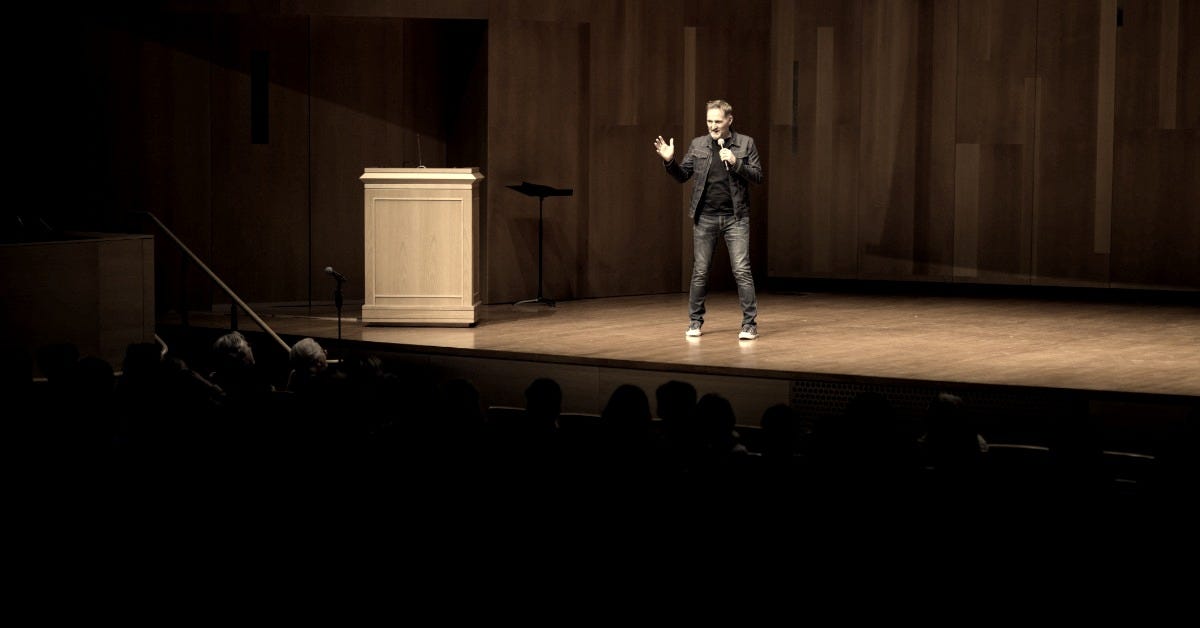
About Patrick Larsen
Patrick Larsen is an Emmy Award-winning production designer and founder of Studio Bound in Singapore. His work includes Expo 2020 Dubai opening and closing ceremonies, broadcast production environments for Vancouver 2010 and Rio 2016, Universal Studios Singapore attractions, permanent installations across Asia and the Middle East, and broadcast design for BBC, CNN, and NBC. He has collaborated extensively with Dragone and producer Five Currents on projects spanning Saudi Arabia, China, Las Vegas, and the UAE.
Visit studiobound.sg to see the full portfolio. Read more at patricklarsen.studio.
Further reading: Patrick Larsen: Two Decades of Design Across Five Continents | How Twenty Years of Designing for the World's Biggest Stages Actually Started


